

CLL Advocates Newest Trustee
A very warm welcome to our newest CLL Advocates NZ Trustee, Diane Ward.
Regular followers of our Facebook group will know Diane well, and we’re delighted she’s willing to join the Board and contribute her skills and lived experience and her in-depth knowledge of CLL to our work.
Here is a little bit about the lovely Diane:
Diane Ward is a retired primary teacher, principal, and ESL teacher. She is well travelled and has lived and worked in several different countries.
She was diagnosed with CLL in 2018. It came as a shock and since then she has made a number of lifestyle changes. She has researched CLL and is passionate about fighting for the funding of drugs that are readily available in many other countries as first line treatment.
She would like everybody who is diagnosed with CLL to have a funded initial appointment with a specialist who could explain its intricacies.
Diane is a regular contributor to our Facebook group and is keen to encourage wider engagement in discussion and active support for our efforts to access better treatments for New Zealanders living with CLL.


Health Select Committee's report into the Therapeutic Products Bill
On Tuesday 14th of June, the Health Select Committee's report into the Therapeutic Products Bill was released. It can be accessed here: Therapeutic Products Bill final report
If you have had the chance to thoroughly review this report and have gained additional insights, please do to share your findings to: clladvocates@outlook.co.nz or via our CLL Advocates Facebook group: CLL Advocates Facebook group
We have a significant amount of information to cover, and we are particularly concerned about the future of New Zealand's clinical trial framework, especially regarding the absence of an equivalent to Section 29.

Therapeutic Products Bill Hikoi



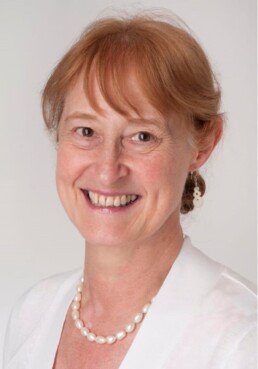
Warmest congratulations to Dr Ruth Spearing CNZM
Dr Ruth Spearing, a distinguished haematologist and medical researcher with a strong interest in CLL, has been made a Companion of the New Zealand Order of Merit for services to haematology in the King’s Birthday Honours.
Dr Ruth Spearing has been a consultant haematologist and taken a lead nationally in haematology trials. She was involved in setting up the partnership with the UK Medical Research Haematology Trials group which New Zealand joined in 1989. As well as many other clinical trials, she is the New Zealand Principle Investigator for the UK MRC Acute Myeloid Leukaemia trails which have has seen an improvement in survival in this condition from 2% to 56%. The outcomes are now as good as if not better than other countries. She was the New Zealand Principal Investigator for the UK MRC myeloma VII trial which was published in the New England Journal of Medicine and which established autologous (self) stem cell transplantation as part of the upfront treatment of myeloma.
She has a particular interest in adolescents and young adults and is the Canterbury Clinical Lead for the Adolescent and Young Adult Cancer Service and on the National Adolescent and Young Adult Cancer Governance Group. She has also had various leadership roles being a Board Member of the New Zealand Medical Association, an elected member of the Canterbury District Health Board Clinical Board and Chair of the Canterbury Hospitals Medical Staff Association.
Looking after Barry Mather was a privilege as he was obviously such a fabulous and generous man. He was aware that only with research will there be any meaningful advances. It is very satisfying to see that money that Barry has donated has gone to towards research into the condition that he had, Chronic Lymphocytic Leukaemia, and also to enable the setting up of a Clinical Haematology Research Unit down in Dunedin which now is progressing well with its own funding.
See RNZ’s interview here: Kings-birthday-honours-Ruth-Spearing
Haematologist Dr Ruth Spearing said being made a Companion of the New Zealand Order of Merit for her services to haematology was a "huge" honour and surprise.
"I'd like to think that I'm actually accepting this on behalf of all the haematologists in the country," she said.
Spearing has led internationally recognised research into blood cancers for more than 30 years, and the Ruth Spearing Cancer Research Trust was established in 2008, which supported South Island haematology research.
Spearing said a career highlight had been persuading Pharmac to fund a drug which enabled New Zealand to be part of a recent trial.
"We managed to persuade them that they needed to bend their rules and as a result of them bending their rules and enabling us to purchase a drug at a greatly reduced cost outside of their usual rules, it resulted in us getting the best ever results.
"Persuading Pharmac to do that is probably my career highlight."

CLL Advocates June Newsletter
Dear Friends of CLL Advocates
We have a lot to report on and a lot to get on with!
CLL Focus groups
We’re pleased to share an overview of key findings from the CLL patient focus group discussions we held in December 2022 (Focus Groups Research – CLL Advocates NZ)
It highlights the major themes and issues that emerged from the research and sets out priority areas of focus for CLLANZ. Get in touch if you’d like to help with these! Meanwhile we’re working with the facilitator of the focus groups to follow up on her recommendation that we survey a wider group of patients and carers.
Local support groups for CLL patients
Another action arising from the focus groups is the need for local support groups.
Are you interested in joining or starting one in your region?
Please contact Diane Ward: dianew564@gmail.com to find out more about this initiative.
The FixRx Buyers Club
We’re currently checking out this buyers’ club that helps patients across the world access authentic medications at affordable cost. If you have any experience of this or are interested in the concept let us know: FixRx Buyers Club
‘Fabulous ladies in the same boat’
Read this great story about three women who met online through being in the same boat - living with CLL. Despite different ages and lives, the three have supported each and become great friends while sharing and navigating the challenges of CLL: Fabulous ladies in the same boat
CLL Advocates Give a Little page
Please help support our mission. No matter how small, your donation will help us advocate for better treatments for CLL and improve the lives of those living with this disease.
Thanks to those who’ve already made donations: CLL Advocates Give a Little Page
Frequently asked questions
A recent update to the "About CLL" section on the webpage includes section that answers common questions about CLL: Frequently asked questions
It also includes a list of questions patients can ask their doctors to better understand their diagnosis and treatment options. Questions for your doctor
Please send any feedback to trustees@clladvocates.org
Best wishes
The Trustees
CLL Advocates NZ

New Zealand's Medicines Landscape 2022/23
Medicines New Zealand has today released the 2022/23 edition of their annual publication New Zealand’s Medicines Landscape. This edition sheds light on the significant cost of ill health to New Zealand and reiterates that New Zealand continues to rank last among the OECD countries for access to modern medicines.
A new report cited in the Landscape shows that New Zealand is in last place amongst OECD countries, with Hungary second to last, in terms of public health system access to modern medicines. New Zealand continues to lag well behind countries like Australia and the UK.
"New Zealand likes to compare itself to Australia and hopes to be better than them. It appears we need to lower our expectations when it comes to modern medicines access- so it's a case of ‘Goodbye Australia - Hello Hungary’ for us and our Health system’s access to modern medicines" says Dr Graeme Jarvis, CEO of Medicines New Zealand.
The Landscape also highlights that the over 80 medicines on Pharmac’s Options for Investment list remain in a state of limbo, for more than five years and counting on average, as they still wait for a funding decision to be made. This is despite the current Government providing some much-needed additional investment to help try and clear the list of medicines - many of which are standard of care in other OECD countries. This creates issues in New Zealand with inequity of access for patients, the health system, broader society and the economy. The country is therefore missing out on the benefits that the medicines could bring.
"It is well established that medicines play a critical role in any health system, allow patients and carers to go back to work and help reduce hospitalisation which may help relieve some of the hospital workforce issues. So it is somewhat surprising that they are not better valued as a critical tool within the health system and society here in New Zealand."
The Landscape also highlights solutions that could allow New Zealand to catch up with our peer OECD nations including the need for the development of a fit-for-purpose, future focussed Medicines Strategy. The need for a Medicines Strategy to be developed by February 2023 was also a recommendation from the Independent Pharmac Review Panel's final report. However, there is no sign of that Strategy being developed at all. Instead, the country is still waiting for it, just like it is for the many medicines on the waiting lists.
The 2022/23 edition of New Zealand’s Medicines Landscape can be found online here.
The PhRMA Report: Global Access to New Medicines Report can be found online here

NZ’s Shameful Health Secret
New Zealand sits at the bottom of the western world for access to modern medicines. Pharmac decide what drugs we buy and when. So why aren’t Kiwis getting the medicines they need?
Listen to Rachel Smalley discuss this topic: Rachel Smalley. NZ’s Shameful Health Secret

Understanding the Importance of Screening for Skin Cancer While Living with CLL/SLL
Most individuals with CLL/SLL understand that the compromised immune system is the reason that an increased infection risk comes along with having the disease. But not as many are aware that secondary cancers, such as skin cancer, is also caused by an immune system that is no longer functioning at its best.
Read more here: Screening for Skin Cancer While Living with CLL/SLL

Time taken for Pharmac funding decisions ‘too long’, says Medicines NZ
It takes the nation's drug-buying agency, Pharmac, an average of 7.7 years to make funding decisions about potentially life-saving medicines, a report has found.
The Pharmac's Medicines Waiting Lists: Impacts on Patients in Aotearoa New Zealand report, commissioned by lobby group Medicines New Zealand found it took on an average nearly eight years to reach a decision on applications across all Pharmac lists.
Read the Stuff article here: Pharmac medicines waiting lists too long
Here is the full report: Pharmac Waiting Lists Report April 2023

Cancer patients harmed by ongoing treatment delays at Southern health board
In the first two months of 2021, 27 patients were harmed by cancer treatment delays, the Otago Daily Times reported.
Three became so sick while waiting they were unfit for treatment.
Have you been affected? Please email: newsdesk@nzherald.co.nz
Please read more here: Cancer patients harmed by treatment delays